
Quick answer
Transport and logistics finance covers the funding trucking and freight businesses need: prime movers, trailers, depots, fuel, wages and the cash gap while customers pay invoices. Ownright Custom Finance arranges transport finance Australia-wide for owner-drivers, small fleets and logistics operators, including those with tax debts or thin paperwork.
Key points
- Trucks and trailers are high-value assets that often secure their own finance
- Slow-paying freight customers create constant cash-flow pressure
- Fuel, tolls, wages and maintenance go out before invoices are paid
- Owner-drivers and fleets are assessed differently
- Ownright arranges transport finance Australia-wide
- Suits
- Owner-drivers, small and mid-size fleets, couriers, freight forwarders and logistics firms
- Security
- Trucks, trailers, equipment, property or none
- Key issue
- Paying running costs before freight invoices clear
- Australia-wide
- Yes
What is transport and logistics finance?
Freight businesses run on thin margins and heavy equipment. A prime mover can cost as much as a house, and the diesel to run it goes out every week, whether or not the customer has paid. Transport and logistics finance is the set of loans and facilities built around that reality.
It is not one product. It is a toolkit that includes asset finance for trucks and trailers, working capital for running costs, invoice finance for slow payers and refinancing for businesses with too many moving parts.
Who does transport finance suit?
- Owner-drivers buying or upgrading a prime mover
- Small fleets adding trucks to win a new contract
- Couriers and last-mile delivery operators
- Freight forwarders and warehousing companies
- Livestock, grain and bulk haulage contractors
- Regional carriers servicing mines, farms and ports
For vehicle-only needs, our truck finance page goes into the specifics of financing the machine itself.
What can transport finance cover?
| Need | Typical structure |
|---|---|
| Prime mover, rigid truck or van | Asset finance, such as a chattel mortgage |
| Trailers, tippers, refrigerated bodies | Equipment or vehicle finance |
| Fuel, tyres, servicing, wages | Working capital loans |
| Waiting 30 to 60 days for freight invoices | Invoice finance |
| Depot, yard or warehouse | Commercial property finance |
| Debt tangle or tax backlog | Business loan refinance |
The chattel mortgage guide explains a structure commonly used for trucks and work vehicles.
What do lenders look at in transport?
Transport lenders tend to look at both the asset and the operator:
- Industry experience and licences held
- The age, make and condition of the truck or trailer
- Contracts, key customers and how concentrated the revenue is
- Bank statements and BAS showing consistent turnover
- Existing finance commitments and repayment history
- Debtor days: how long customers take to pay
- Compliance and record-keeping practices
- Security: the vehicle, other equipment or property
The National Heavy Vehicle Regulator explains that responsibility for heavy vehicle safety is shared along the supply chain, under the chain of responsibility framework. Lenders like to see operators who take their obligations seriously.
How does Ownright approach transport finance?
Trevor Scott has more than 40 years in finance, and the team has arranged funding for operators who had been told no by the obvious places. We begin with your actual operation: what you haul, who for, how long they take to pay and what the next truck will earn. Then we look for the structure that takes pressure off.
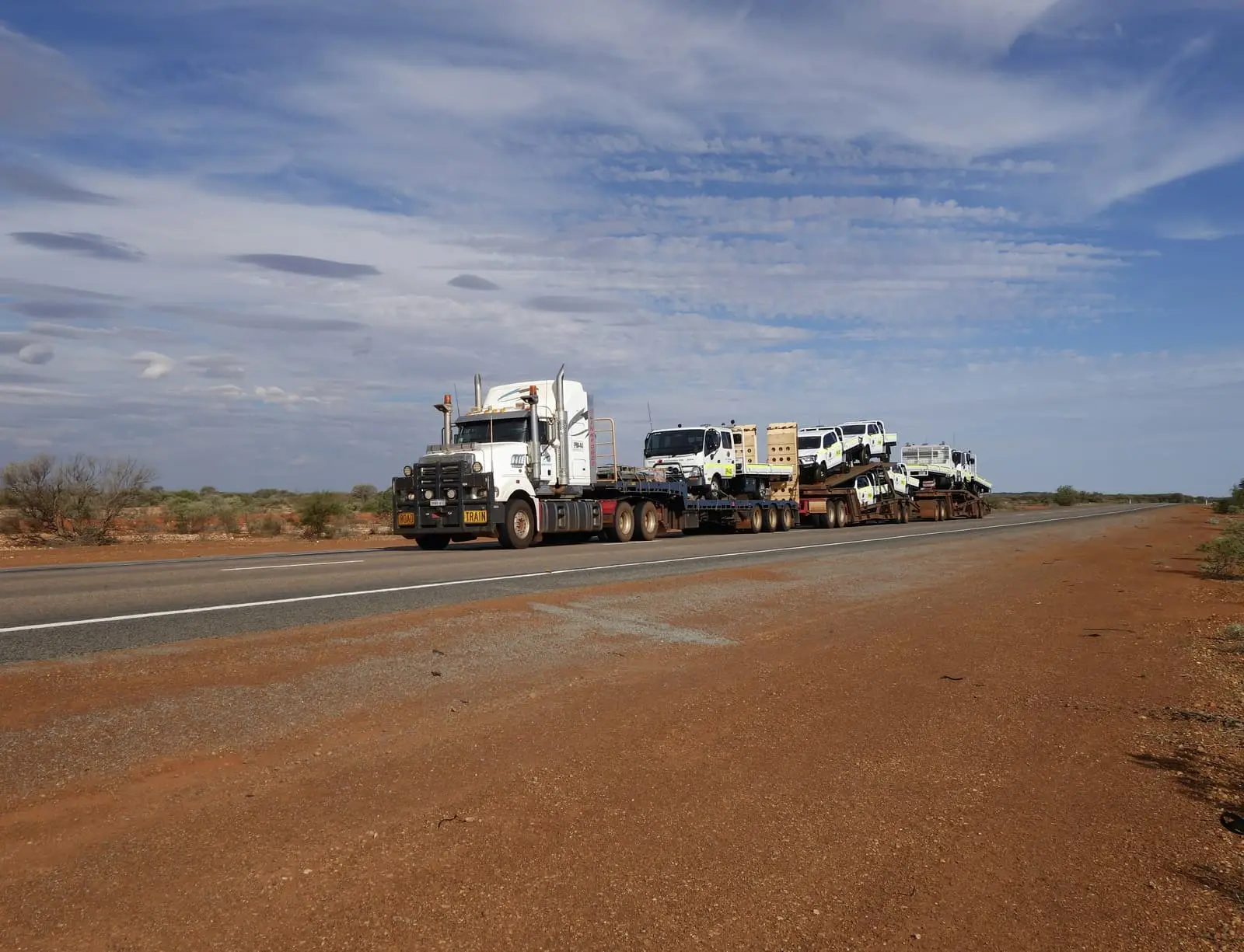
Where mainstream lenders turn cautious, we search for those who understand transport, including non-bank and private lenders. We work Australia-wide from our Knoxfield head office, from capital-city couriers to remote-route road trains. When you are ready, outline your situation here.
Owner-driver versus fleet
| Factor | Owner-driver | Fleet operator |
|---|---|---|
| Typical funding | One truck, maybe a trailer | Multiple assets, depots, wages |
| Lender focus | Personal experience, contract, deposit | Customer base, systems, cash flow |
| Common pressure | One breakdown can stop income | Slow-paying large customers |
| Useful extra | Working capital buffer | Invoice finance or line of credit |
Why is cash flow so tight in freight?
Costs arrive weekly: fuel, tolls, wages, insurance, repayments. Income arrives in arrears, often after 30 or more days. If one large customer pays late, the whole operation can seize. Invoice finance and working capital loans address the gap directly, and many operators use both.
An illustrative example
Consider a regional carrier that wins a contract with a large retailer. Taking the work means another prime mover and more drivers, but the retailer pays on long terms. A broker could examine a truck finance package for the vehicle plus an invoice facility to cover the payment delay. Whether that is possible depends on the lender, the contract and the carrier’s history. This is illustrative only.
How does finance differ across freight niches?
“Transport” covers very different operations, and lenders read each one differently.
| Niche | What drives the cash cycle | What a lender tends to focus on |
|---|---|---|
| Line-haul and interstate freight | Long routes, fuel, tolls, driver wages | Contract stability, fleet age, utilisation |
| Rural and bulk haulage | Harvest, livestock movements, grain seasons | Seasonality, relationships with growers and agents |
| Courier and last-mile delivery | Vans, fast turnover of work | Contract dependency, platform or depot arrangements |
| Tipper and earthmoving | Project work, site access, weather | Pipeline of jobs, builder payment habits |
| Refrigerated and specialised freight | Higher-value equipment, strict standards | Asset condition, customer concentration |
A harvest cartage contractor needs repayments that follow the grain season, not a flat monthly schedule. A courier operator on a rolling contract may need a short runway to prove the work is steady before a lender will extend a longer term. The same truck can be a sensible purchase in one setting and a risk in another.
What do fuel tax credits mean for cash flow?
The ATO explains that fuel tax credits are available to businesses for fuel used in eligible activities, and for road transport that includes heavy vehicles with a gross vehicle mass above 4.5 tonnes used in a business on public roads. Claiming fuel tax credits requires GST registration, and claims are made through the activity statement. For many operators this is a meaningful cash-flow lever, which is why lenders sometimes ask how consistently the claims are lodged.
If BAS has fallen behind, fuel tax credits may be sitting unclaimed while cash is tight. Bringing lodgements up to date is often a quicker route to breathing room than a new loan, and it makes any future application stronger. Your accountant or BAS agent can confirm what applies to your fleet.
Why check the PPSR before buying a used truck?
The Personal Property Securities Register is the government register of security interests in personal property, including vehicles and equipment, and anyone can search it. A buyer who searches before purchasing can see whether someone has already registered a claim over the truck. A lender will do the same. Finding an existing interest after the deposit has gone can derail a deal, so asking the seller for clearance, or searching it yourself, is a cheap precaution for second-hand prime movers, trailers and plant.
How should repayments match the work?
Fleet finance works better when the shape of the repayment mirrors the shape of the income. Options include:
- Longer terms with a residual for assets that hold value, where a lender is comfortable with that structure
- Seasonal or stepped repayments for haulage tied to harvest or events
- A separate working capital line, so repayment on the truck is not drawn from the same pool as fuel and wages
- Consolidating several small facilities into one so due dates stop colliding
None is right for every operator. The aim is a structure where one slow fortnight does not threaten the whole business.
Mistakes transport operators make
- Buying a truck first and arranging running-cost funding later
- Relying on one big customer without a buffer
- Falling behind on BAS or fuel-related reporting
- Ignoring maintenance reserves until a breakdown strikes
- Choosing a finance term that outlives the useful life of the asset
- Mixing personal and business accounts
What documents should I have ready?
- Photo ID and licence details
- Recent bank statements and BAS
- Contracts or letters of intent from customers
- Truck or trailer details, including quotes
- Debtor and creditor lists
- Existing finance statements
- ATO account statement if applicable
Our business loan documents checklist covers the common items.
What if I am behind with the ATO or have credit marks?
It does not automatically end the conversation. Business loans to clear ATO debt explain how a payout can work, and the equipment finance page covers asset-secured options.
Which pressure points point to which tool?
| Pressure point | Tool often considered | Where to read more |
|---|---|---|
| Need another truck to take on a contract | Asset finance | Truck finance |
| Customers paying slowly | Invoice facility | Invoice finance |
| Fuel and wages ahead of income | Working capital | Working capital loans |
| Tax backlog and creditors piling up | Refinance and restructure | Business loan refinance |
| Mixed fleet, depot and equipment debt | Combined or restructured facility | Secured business loans |
What does Ownright do differently for transport operators?
Plenty of freight operators come to us after a lender decided the business was “too risky” because of its industry, its age or a gap in the paperwork. Trevor Scott has more than 40 years in finance and has watched transport businesses weather fuel spikes, rate swings and contract losses. We ask practical questions first: what does each truck earn per week, who your top three customers are, how long they take to pay and what happens to the business if the biggest one leaves.
Those answers shape the application and the lender choice. Sometimes the best answer is a straightforward asset loan with a sensible term. Sometimes it is a secured facility against property that also frees up cash. Occasionally it is something most brokers have not tried. If your fleet or your next truck needs funding that fits the way you really work, send us the facts through our application page.
Ready to hit the road?
If the next truck, trailer or cash-flow fix is on your mind, reach out to Ownright and we will see what could be possible. If Ownright can’t find the solution, no one can.
How it works, step by step
- 1
Step 1
We learn how you run: routes, contracts, customers and how long they take to pay.
- 2
Step 2
We match funding to the need: asset finance, invoice finance, working capital or a refinance.
- 3
Step 3
We present contracts, bank statements and asset details in the way lenders prefer.
- 4
Step 4
We coordinate with dealers, lenders and your accountant until the deal settles.
Frequently asked questions
Can an owner-driver get finance for a prime mover?
Yes, it can be possible. Lenders look at your driving and industry experience, any contracts, deposit, credit history and the age and value of the truck. A secured structure, where the truck backs the loan, is common. Ownright can discuss options for new and used trucks.
How does invoice finance help a transport business?
Freight customers often pay in 30 to 60 days or more, while fuel and wages are due weekly. Invoice finance advances funds against issued invoices, so cash is available sooner. It suits businesses with reliable commercial customers and a steady invoice flow.
Can I finance trailers, tippers or refrigerated bodies?
Generally yes. Trailers and specialist bodies are commonly financed as part of a vehicle or equipment package. The type, age and use of the asset affect the lender's view. Our truck finance page covers vehicle-specific details.
What about fuel and maintenance costs?
They are usually paid from working capital, not asset finance. A working capital loan or business line of credit can smooth fuel, tolls, tyres and servicing between payments. Planning for a major repair cycle is one reason fleets keep a buffer.
Can I get finance if I owe the ATO?
It can be possible. Transport operators sometimes fall behind on GST, PAYG or fuel-related reporting when payments are late. Some lenders will consider a loan that clears the ATO, often with property security, which we cover on our ATO debt business loans page.
Are chain of responsibility obligations relevant to lenders?
Lenders are interested in a well-run, compliant operation. The National Heavy Vehicle Regulator explains that parties in the supply chain share responsibility for heavy vehicle safety. Having your systems and records in order tends to support a finance application.
Can a young business get transport finance?
Yes, though options narrow with less history. Strong industry experience, a long-term contract, a deposit or property security can help. See our start-up business loans page for how lenders view newer ventures.
Do you fund transport operators in remote areas?
Ownright works Australia-wide, including regional and remote routes. Long distances, seasonal freight and distant dealers add complexity, which we plan around.