
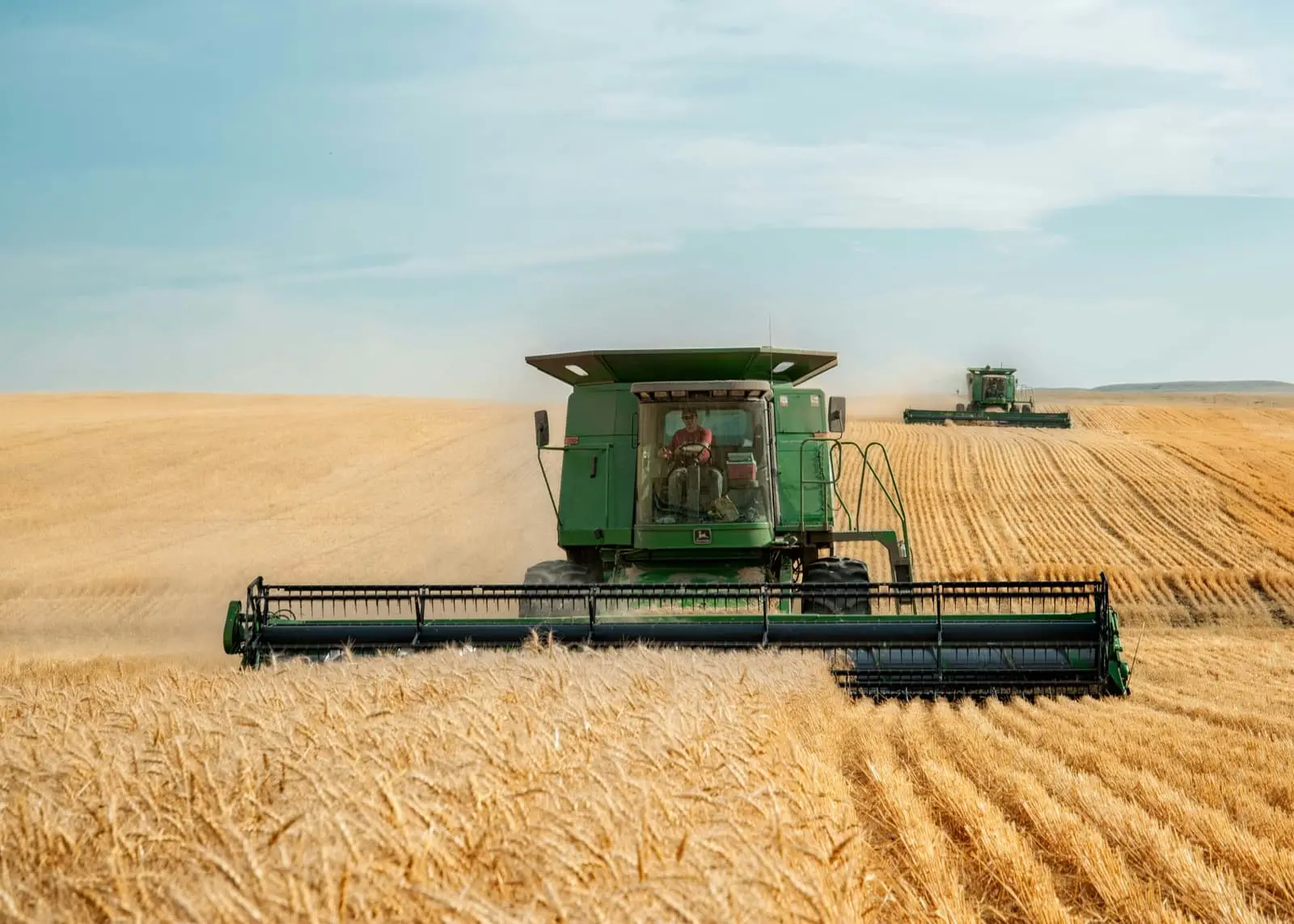
Quick answer
Broadacre and cropping loans fund grain, oilseed and pulse farms, covering land purchase, refinancing, operating costs and machinery. Lenders look at rainfall zone, yield history, input costs, storage and marketing arrangements. Ownright Custom Finance arranges cropping finance Australia-wide, including seasonal and restructure solutions.
Key points
- Cropping income is seasonal, so loan structure should match the harvest cycle
- Lenders weigh rainfall zone, yield history, inputs, storage and marketing
- Finance can cover land, machinery, operating costs and refinancing
- Hard seasons are common, and options exist after a poor year
- Mainstream, non-bank and private lenders can all play a role
- Suits
- Wheat, barley, canola, pulse and mixed cropping operations
- Cash cycle
- Heavy costs at sowing, income mostly at and after harvest
- Security
- Farmland, with machinery and crop as additional security where relevant
- Australia-wide
- Yes
What are broadacre and cropping loans?
Broadacre farming covers the big paddocks: wheat, barley, canola, lupins, chickpeas, faba beans, oats and the rest of the grain, oilseed and pulse crops grown across the wheatbelts of Western Australia, South Australia, Victoria, New South Wales and Queensland. A broadacre loan is simply finance tied to that kind of operation, whether it funds land, machinery, running costs or a debt restructure.
What sets it apart is timing. Costs land early, at sowing, and income arrives mainly at and after harvest. Rainfall, frost, heat and prices can move the result from one year to the next. A good cropping loan respects that rhythm. A poor fit squeezes the cash flow at exactly the wrong time of year, which is why Ownright Custom Finance spends time on structure, not just on getting a yes.
How do lenders assess a cropping farm?
An agribusiness assessor will usually want to understand:
- Rainfall zone and soils. A reliable-rainfall district and a marginal one tell different stories about risk and yield variability.
- Yield history. Several years of results by crop, ideally with comparison against district averages published by ABARES and state departments.
- Cost of production. Seed, fertiliser, chemicals, fuel, labour, repairs, insurance and finance costs.
- Marketing. Whether grain is sold at harvest, stored, contracted forward or pooled.
- Storage. On-farm silos and sheds change your flexibility and risk.
- Machinery. Age, condition and whether it is owned, leased or financed.
- Debt position. Total borrowings, security available and repayment history.
- Buffers. Farm management deposits, stored grain, off-farm income and equity.
Seasonal cash flow at a glance
| Period | What happens | Finance implication |
|---|---|---|
| Pre-sowing | Seed, fertiliser, chemical and fuel purchases | Operating finance or line of credit drawn |
| In-crop | Spraying, repairs, labour | Ongoing working capital needed |
| Harvest | Machinery pressure, contractors, storage decisions | Seasonal peak in costs, then first income |
| Post-harvest | Grain sales, repayment of seasonal debt | Opportunity to clear lines and plan the next season |
| Dry spell or frost | Reduced yield or crop loss | Restructure, refinance or short-term support may be needed |
Who do cropping loans suit?
- Growers buying a neighbouring block to scale up
- Family farms refinancing after a lean season
- Operators with ageing headers or seeders who want to renew machinery
- Newer growers moving from leasing to ownership
- Farmers whose bank has pulled back from agriculture or is tightening appetite
For equipment-specific needs, see farm equipment finance and tractor finance. If water is part of your operation, water and irrigation finance covers that side.
How does Ownright approach broadacre finance?
We start by asking how your year actually runs. Sowing windows, harvest contractors, delivery points, storage and marketing choices all influence the structure. From there we put together a presentation for lenders that explains your operation clearly, including any seasonal hit that is distorting the last set of accounts.
Ownright works Australia-wide with mainstream, non-bank and private lenders. For a straightforward expansion, a rural bank may be ideal. When there has been a poor run, an ATO payment plan, a default, or the existing lender wants out, we look at the specialist side of the market, which many brokers never touch. Trevor Scott’s four decades in finance help here: knowing which lender will read a lean year as a blip, and which will treat it as a red flag.
If you are partway through a season and cash is tight, talk to us about your cropping finance before the pressure builds.
Common cropping situations
Illustrative example: after a frost year. A mixed-cropping family has a frost-damaged harvest, a seasonal line at its limit and a bank asking questions. Refinancing the land into a longer-term structure with a seasonal facility on top can create breathing room, so the next sowing is not at risk.
Illustrative example: scaling up. A grower wants to buy an adjoining block as machinery capacity is underused. The lender looks at the combined operation and the reduced cost per hectare of the extra land, not just the new block.
Illustrative example: machinery renewal. An ageing header is costing more in repairs each harvest. Financing a replacement through a structure that matches seasonal income, rather than monthly payments year-round, can ease the load.
Mistakes to avoid
- Borrowing against a single record-yield season as if it will repeat.
- Letting seasonal debt roll over without a plan to clear it.
- Overlooking GST, BAS and ATO obligations during a tight year.
- Using unsuitable short-term finance for long-term assets.
- Ignoring storage and marketing options that could strengthen your cash flow.
- Waiting until the bank sends a formal notice before calling a broker.
What to have ready
- Two to three years of financial statements and tax returns
- Yield and area by crop for recent seasons
- Machinery schedule
- Current loan statements and security details
- Storage and marketing information
- ATO account status if there is any debt
For grower advocacy and market information, see Grain Producers Australia and ABARES. The ATO also publishes information on farm management deposits and income averaging for primary producers.
If Ownright cannot find the solution, no one can. Start a cropping loan enquiry and we will look at what is genuinely available for your farm. We cannot guarantee approval, but we will give you a clear read of your options.
What does a weak season mean for next year’s finance?
Banks and other lenders ask a straightforward question: how will you fund next season if this one fell short? The answer might include stored grain, farm management deposits, an operating line, sale of surplus machinery or off-farm income. If the plan has gaps, it is better to address them before the sowing window than after. Sometimes a refinance that rolls seasonal debt into a longer-term loan solves the immediate squeeze, though it should be weighed against the total cost of carrying that debt longer.
How do lenders treat leased land?
Many cropping businesses grow on a mix of owned and leased country. Leases improve scale but do not provide security, and their terms vary. Lenders will want to see lease agreements, remaining terms and the rent payable, because they affect cash flow without adding to the asset base. A stable, long-standing lease with a known landlord is viewed more favourably than a handshake arrangement renewed each year.
Do crop insurance and hedging matter?
Multi-peril crop insurance is limited in Australia, but hail, fire and some other cover is available, and lenders may ask about it. Forward sales and pooling arrangements also reduce price risk. They are not essential, but showing that you manage risk, whether through insurance, marketing or buffers, tends to reassure credit teams. See our guide on drought and farm cash flow for related strategies.
How do regions and rainfall zones change the lending picture?
Cropping is not the same everywhere, and lenders know it. Reliable-rainfall districts with deep soils often carry higher yields and steadier results, while low-rainfall and marginal areas can swing sharply between seasons. Frost risk, soil constraints, distance to a port or receival point and the crop mix all feed into how a credit team sees a farm.
| Factor | Why a lender cares |
|---|---|
| Rainfall reliability | Affects yield stability and how many poor years a farm can absorb |
| Soil type and constraints | Shapes crop choice and long-term productivity |
| Distance to markets | Freight costs reduce the margin on every tonne |
| Crop and rotation mix | Spreading across crops can spread risk |
| Scale | Larger area can spread fixed costs, but also increases exposure |
We describe your district and farming system in plain terms so a lender who has never driven the road understands what a good year and a bad year look like there.
What should a cropping cash flow forecast show?
A useful forecast is built season by season, not as an annual average. It usually shows:
- Planned area by crop, with expected yields in a poor, average and good year
- Prices you are assuming, and whether any grain has been sold forward
- Input costs timed to when they fall due
- Machinery, labour and contractor costs, including harvest
- Debt repayments and when they fall
- Cash on hand and the lowest point in the year
The lowest cash point is the one lenders watch. If a forecast shows the farm running out of money in the weeks before harvest, a seasonal line or a different loan structure may be needed. Better to see that on paper than to discover it in the paddock.
Owning machinery or using contractors?
Cropping machinery is expensive, and a large share of the debt on many grain farms sits in headers, tractors, seeders and sprayers. Some operators run their own fleet, others hire contractors for harvest or spraying, and many do a mix. Lenders will ask whether the machinery fits the area farmed. A big fleet on a small area can strain cash flow, while ageing machinery can cause costly breakdowns at the worst moment. Our guide on farm machinery lease versus loan explains the trade-offs, and tractor finance covers the individual machine side.
Using income-smoothing tools
Primary producers have access to tax tools designed for swings in income, including farm management deposits, which allow eligible producers to set aside income in good years and draw it down in leaner ones, and income averaging. A lender will often view a healthy farm management deposit balance as a buffer, and it can improve a borrower’s standing. Because the rules are specific, speak to your accountant about what suits your business, and tell your broker what you hold so it can be counted.
What happens at renewal time?
Seasonal and working capital lines usually come up for review each year, often after harvest. That is the natural moment to tidy the structure: clear the season’s debt, reset limits and check that the longer-term loans still suit the farm. Going to renewal with a clean set of accounts, a forecast for the coming season and a clear marketing plan makes the discussion easier. If your lender is not renewing on acceptable terms, the same material gives a new lender what it needs, and farm debt refinance explains how a move works.
How it works, step by step
- 1
Step 1
We ask about your rotation, rainfall zone, area under crop, storage and how you market your grain.
- 2
Step 2
We pull together yield history, financials and debts into a story lenders can follow.
- 3
Step 3
We match the file to lenders familiar with grain farming and structure repayments around harvest.
- 4
Step 4
We manage the valuation, approval and settlement, and plan the next season with you.
Frequently asked questions
What is a broadacre loan?
Broadacre refers to large-scale farming over extensive areas, mainly cereal, oilseed and pulse cropping and often livestock in rotation. A broadacre loan is finance for the land, machinery or running costs of such an operation. It is usually secured over farmland and structured around harvest income.
How do lenders view a poor season?
Cropping is exposed to rainfall and frost, so lenders expect variability. They look at several seasons, your costs, your debt level and whether you have buffers such as stored grain or farm management deposits. A single poor year is not necessarily a decline.
Can I borrow for sowing and input costs?
Yes, operating finance for seed, fertiliser, chemicals, fuel and labour is a standard part of cropping lending. It can be structured as a line of credit or seasonal facility that is repaid at harvest, depending on the lender and your security.
Does grain in storage count for anything?
It can. Stored grain is a trading asset, and some lenders take security over crops or stored commodities. Records of quantity, quality and marketing contracts help. How much weight it carries depends on the lender.
What about finance for headers and seeders?
Machinery is a major cost in cropping. You can finance it through a chattel mortgage, lease or loan, or build it into a wider rural facility. Our farm equipment finance and lease versus loan guide compare the options.
Can I get a cropping loan with a bad credit history?
It can be possible. A past default or missed payment makes things harder, but farm lending also looks at land security and the cause of the problem. Specialist and private lenders may consider cases that mainstream lenders decline.
Do farm management deposits matter to lenders?
They can. Farm management deposits are a tax-linked savings tool for primary producers, administered through the ATO and the Department of Agriculture, and a balance can show a lender you have a buffer. Talk to your accountant about whether they suit you.