
Quick answer
Ownright Custom Finance arranges difficult home loans, private first and second mortgages, bridging, farm, commercial and business finance across Victoria. Our head office is in Knoxfield, Melbourne, and we work with city, regional and rural Victorian borrowers whose deal has been declined elsewhere or doesn't fit a standard bank box.
Key points
- Head office in Knoxfield, so Victorian deals are handled by a local team
- Private and second mortgages, bridging and caveat finance for tight timeframes
- Farm and agri finance from Gippsland dairy to Mallee cropping
- Land transfer duty and Victorian titles processes explained in plain English
- Based in
- Knoxfield, Melbourne
- Suits
- Declined, complex or time-pressured Victorian borrowers
- Security
- Residential, rural, commercial or industrial property
- Australia-wide
- Yes
What does finance look like in Victoria?
Victoria is a small state with a very big range of property. Within a couple of hours’ drive you can go from an inner-city terrace or a Dandenong industrial shed to a Gippsland dairy, a Wimmera cropping block or a Sunraysia orchard. That variety is the reason standard bank policy trips so many Victorian borrowers: a lender who is comfortable with a Melbourne townhouse may have no appetite for a half-leased regional shop or a farm with a tangled title.
Ownright Custom Finance is based at Knoxfield, in Melbourne’s outer east, and our director Trevor Scott has spent more than 40 years in finance. Being Victorian helps, but the real strength is knowing which lenders will look at which kind of Victorian deal, including options a lot of brokers never hear about.
Where do Victorian deals usually come from?
Different corners of the state produce different kinds of finance problems.
| Area | Typical situation | Common finance route |
|---|---|---|
| Melbourne and the growth corridors | Self-employed buyers, fast settlements, investors with several properties | Low doc and alt-doc loans, bridging, second mortgages |
| Geelong, Ballarat and Bendigo | Established regional markets with mixed employment | Refinance, equity release, difficult home loans |
| Gippsland and the south-west | Dairy and beef families, succession questions | Farm loans, farm debt refinance, succession finance |
| Wimmera and Mallee | Cropping businesses exposed to seasons and input costs | Cash-flow-focused rural finance, equipment finance |
| Goulburn Valley, Murray and Sunraysia | Horticulture, irrigation and seasonal labour | Orchard, water and equipment finance |
| Mornington Peninsula, Yarra Valley, Macedon Ranges | Lifestyle acreage and small wine or food businesses | Lifestyle property loans, private mortgages |
The Australian Bureau of Statistics and ABARES regularly publish agricultural commodity data that show how widely Victoria’s farming varies, and it is the diversity, more than any single commodity, that shapes the lending conversation.
Which Victorian situations suit private or non-bank finance?
Private and non-bank finance tends to enter the picture when time, documentation or the property itself is the obstacle rather than the borrower’s overall position. Typical examples:
- A purchase has an auction or contract date that a bank’s turnaround can’t meet.
- A business owner has income that is real but hard to show on paper, and needs a low doc or non-bank home loan.
- Existing debt has fallen into arrears and a mortgage refinance is needed before enforcement steps escalate.
- A borrower wants to release equity without refinancing a first mortgage that suits them, which is where a second mortgage is considered.
- A tax debt, a settlement with a former partner or a deceased estate needs funding while the longer-term position is sorted.
If you want the plain-English version of how private lending works, read what a private mortgage is and how it works.
How do Victorian duty and titles processes affect a loan?
Victoria calls its stamp duty “land transfer duty”, and it is administered by the State Revenue Office Victoria. It is mainly a cost of buying or transferring property, so it matters most for purchases, certain title changes and some relationship property settlements. The SRO also administers other land-related taxes that can show up in a lender’s questions about a property, so having your paperwork in order helps.
Titles are held on the Victorian register run through Land Use Victoria, and mortgages and caveats are lodged against the title electronically through the national conveyancing system. In practice this means a lender can lodge security quickly once everything is ready; the slow part is usually documents, valuations or sorting out an issue on the title. How long any step takes depends on the lender, the security and how quickly documents arrive.
What about farm and agri finance in Victoria?
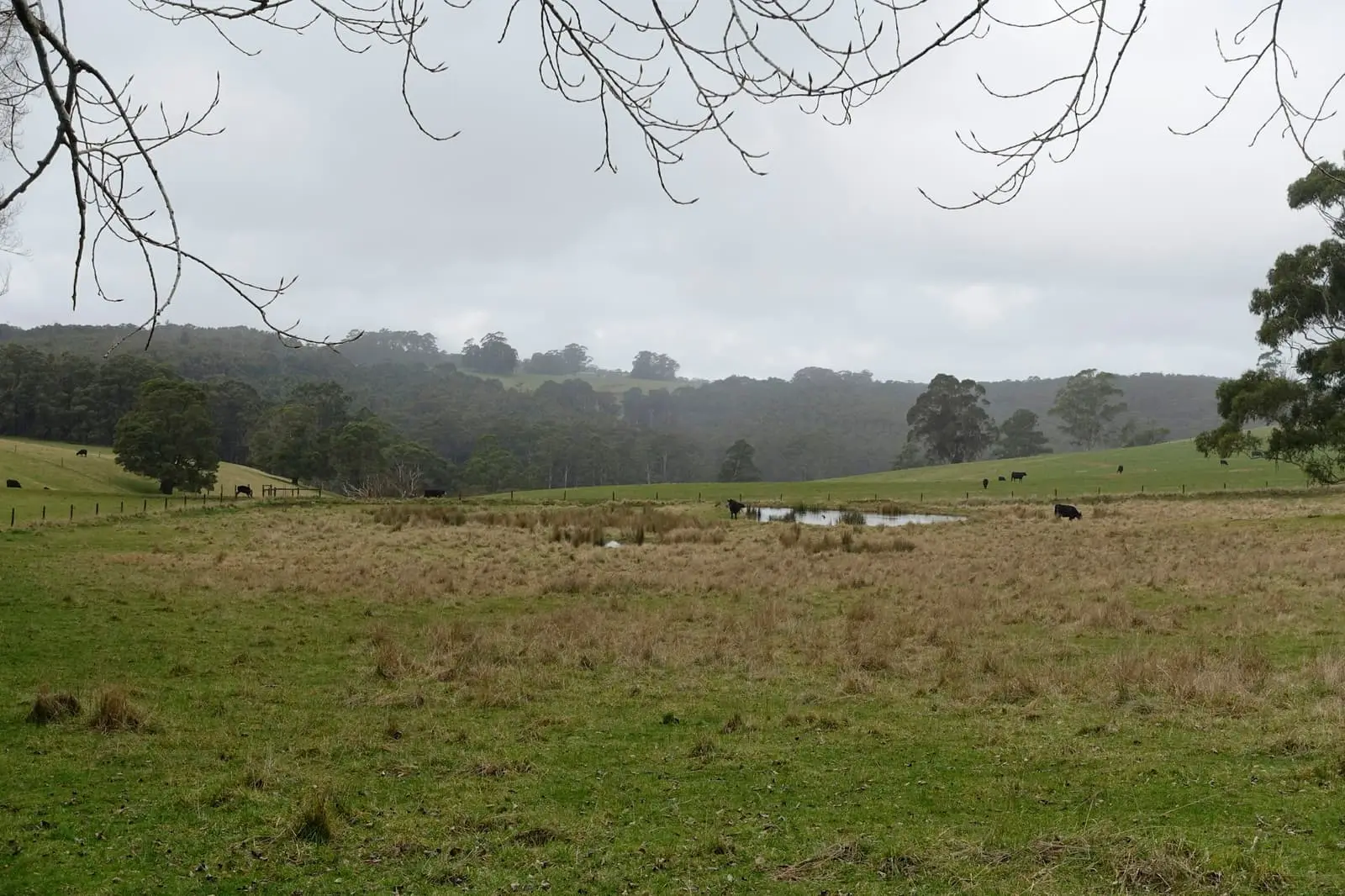
Victorian agriculture is intensive and diverse. Gippsland and the western districts are known for dairy, the Western District also for wool and beef, the Wimmera and Mallee for grain and pulses, and the Goulburn Valley, Murray and Sunraysia for irrigated horticulture, wine grapes and tree crops. Each behaves differently when money gets tight. A dairy farm feels milk-price and input-cost swings; a cropping farm feels seasonal rain and harvest timing; an orchard feels labour, water and market access.
Ownright arranges farm loans, farm debt refinance, dairy farm loans, horticulture and orchard loans and water and irrigation finance for Victorian properties. Lenders in this space pay close attention to cash flow, the farm’s trading history and security, and often to off-farm income as well. The guide on how farm loans work in Australia sets out the basics.
Victoria also has a farm debt mediation scheme under the Farm Debt Mediation Act 2011 (Vic), which is administered through the Victorian Small Business Commission. In broad terms, a secured creditor has to offer mediation to a farmer before taking enforcement action on certain farm mortgages. Mediation can open a window to refinance or restructure, but it is not a cure on its own. If you are in that position, a call early is worth more than a call late.
What does commercial and industrial finance look like?
Melbourne’s industrial belts in the south-east, west and north carry a steady flow of owner-occupier purchases and refinances, and regional centres add their own shops, workshops and depots. Lenders usually care about the lease position, the tenant’s covenant, the type of building and how easy it would be to sell. Our commercial property loan and industrial property loan pages explain the usual criteria, and short-term commercial loans cover situations where a faster or more flexible approach is needed.
What does “who this suits” mean in practice?
Ownright is most useful to Victorians who fall into one of these groups:
- Self-employed owners with strong businesses and awkward paperwork.
- Buyers who have found the property but not yet the right lender.
- Families with equity but patchy credit history.
- Farmers and rural business owners who need a lender that understands seasonal income.
- Investors and developers needing short-term or bridging funds.
What do lenders look at on a Victorian deal?
- The security: location, type, condition, saleability, and whether the title is clean.
- Serviceability or, for private lending, a credible repayment or exit plan.
- Your credit history and the story behind any defaults.
- Existing debts, including tax debts and arrears.
- Evidence of income, which may be traditional or alternative.
- For rural deals, trading history and cash-flow patterns across good and bad seasons.
An illustrative scenario
Picture a self-employed Melbourne tradie with a thriving business and a tax bill that has gone to a payment arrangement. A bank has declined a refinance because of the arrangement and a few late payments. The home has solid equity. The solution may be a short-term private facility to clear the pressure, with a plan to move to a more mainstream loan once twelve months of clean conduct is on the record. This is illustrative only; no two files are identical, and the right answer depends on the details.
How does Ownright approach Victorian deals?
We start by listening, then we dig. Trevor Scott and the team ask what has been tried, why it didn’t work and what a good outcome looks like. Then we use that to match the deal to the right style of lender, prepare the application so it tells a clear story and keep you across progress. Ownright is about solutions: where a bank has said no or a deal is complicated, we look for the path others don’t know about. If you’d like to see whether we can help, start your enquiry here.
Common mistakes to avoid
- Applying to several lenders at once, which leaves a trail of credit enquiries.
- Leaving it until a settlement or default deadline is days away.
- Leaving out a detail, such as a tax debt, that the lender will find anyway.
- Assuming a decline from one bank is the end of the road.
- Signing a contract of sale without an agreed finance path for settlement.
Documents to have ready
Photo ID, recent bank statements, the latest tax returns and notices of assessment where available, a list of assets and liabilities, details of the property (contract of sale, rates notice or title search) and anything that explains unusual circumstances. For farms, add the last few years of financials, a debt schedule and, if relevant, any notices from your current lender.
Ready to talk about your Victorian deal?
Whether it is a Melbourne unit, a Gippsland dairy or a Mallee cropping block, Ownright will give you a straight answer about your options. Get in touch through our application page and tell us what you are trying to achieve. If Ownright can’t find the solution, no one can.
How it works, step by step
- 1
Step 1
A conversation about what you are trying to achieve, what has already been tried and any deadline, such as a settlement date.
- 2
Step 2
We look at the security, the borrowers and the exit, then work out which type of lender suits the Victorian property involved.
- 3
Step 3
We assemble a clean package so the lender sees the full story, not a pile of loose documents.
- 4
Step 4
We stay across the deal through to settlement, including coordination with your conveyancer or solicitor.
Frequently asked questions
Can Ownright arrange private mortgages on Victorian property?
Yes. Ownright arranges private first and second mortgages secured by Victorian residential, rural and commercial property. Whether a private lender is the right fit depends on the security, your exit plan and the timeframe. Many Victorians use private finance as a short bridge while a longer-term solution is put in place.
Do you only work in Melbourne?
No. Our head office is in Knoxfield, but we arrange finance for borrowers across Victoria, from Geelong and Ballarat to Mildura, Gippsland and the Wimmera, and in every other state and territory as well. Most of the process happens by phone, email and secure document sharing.
What is the Victorian Farm Debt Mediation Act?
The Farm Debt Mediation Act 2011 (Vic) requires a secured lender to offer mediation before enforcing certain farm mortgages. It is administered through the Victorian Small Business Commission. It can create breathing space while a refinance or restructure is arranged. Ask us how it may apply to your situation.
Is land transfer duty payable on a refinance?
A straight refinance with the same owners generally does not involve a transfer of the property, so land transfer duty is usually not triggered. Purchases, some title changes and some separations do. The State Revenue Office Victoria publishes the rules, and your conveyancer can confirm what applies.
Can you help if a Victorian bank has already declined me?
Often, yes. A decline usually means the deal didn't fit one lender's policy, not that no lender will consider it. We look at why it was declined, whether it can be fixed, and which non-bank or private options suit the circumstances. We can't promise approval, but we will tell you honestly where you stand.
Can a caveat help me buy time in Victoria?
A caveat lodged on a Victorian title can protect a lender's interest while a registered mortgage is arranged. Some borrowers use caveat finance as a short-term tool. It suits specific situations only, so the first step is a conversation about the security and the exit.
What property types do you finance in Victoria?
Houses, units, townhouses, vacant land, rural properties, hobby farms, working farms, shops, offices, warehouses and mixed-use buildings. Unusual security, such as a small-town commercial building or a property with title complications, is worth raising early.